
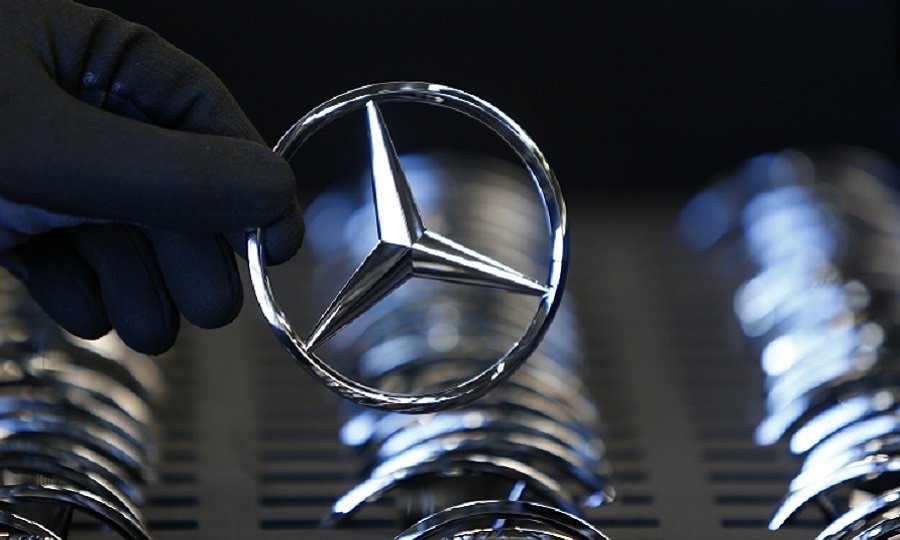
On February 9, 1846, German engineer Wilhelm Maybach was born—known as the “King of Designers” behind the first Mercedes car. Maybach, the son of a carpenter from Stuttgart, became an orphan at the age of 10. Family friends made various efforts to find a home for him and his siblings, even placing an advertisement in a local newspaper.
Eventually, Maybach was taken in at the Bruderhaus, run by theologian Gustav Werner, where he was initially trained as a pastry maker. However, Werner quickly recognized his technical talent. Maybach began studying drawing, physics, mathematics, English, and French, and entered the Bruderhaus factory as an apprentice. There, he met Gottlieb Daimler. Their childhood friendship would later develop into a 30-year partnership that made a major contribution to the modern automotive industry.
From 1883, Maybach and Daimler developed efficient internal combustion engines, marking their first major breakthrough. In 1890, they founded Daimler-Motoren-Gesellschaft to build automobiles, with Maybach serving as technical director. His carburetor design was widely used after 1893, and he fought legal battles to protect his patents.
In 1899, shortly before Daimler’s death, Maybach met racing pioneer Emil Jellinek. A legend was born a year later when Jellinek commissioned Maybach to build 36 specially designed racing cars. He requested a long, low vehicle with a 35-horsepower engine and named it after his daughter: Mercedes. This is widely considered the first modern car.
In 1909, Maybach, together with his son Karl Maybach, founded Luftfahrzeug-Motorenbau to produce aircraft engines, including those used in Zeppelin airships. After World War I, starting in 1922, the first cars bearing the Maybach name—designed by his son—entered the market, competing with Daimler-Benz. Daimler-Benz later acquired Maybach Motorenbau and the brand in 1960.
The tragic story behind the name “Mercedes”
As for the daughter whose name became famous worldwide, Mercedes Jellinek, her life ended tragically. After World War I, Emil Jellinek—by then a diplomat—was accused of espionage and forced to leave Nice. The French government confiscated his villa, boats, and cars, and he died in exile in Switzerland in January 1918. Mercedes was left struggling to survive, even relying on the help of neighbors.
As she grew older, Mercedes faced illness and hardship. She married twice—both husbands were barons—but both marriages ended in separation. She died in a small apartment in Vienna in February 1929, not yet 39 years old. She had no children but was survived by her sister, Maia, born in 1906.
Maia also had a car named after her—an electric model designed by Ferdinand Porsche, which debuted in Vienna in 1907. Unlike the car that bore her sister’s name, however, Maia’s model was not very successful.